Ten years ago today I wrote my first ever blog post.
I have written a whole lot of words since then.

Here's to the next decade!
Ten years ago today I wrote my first ever blog post.
I have written a whole lot of words since then.
Here's to the next decade!
For whatever combination of reasons, I haven't been very creative recently. I've had a long interlude during which I've written very little, drawn / painted very little. I have sat in front of a blank canvas or empty notebook a few times feeling uninspired; but mostly not. Mostly I have just been getting on with life.
Last Sunday, 1st August, I picked up paint and paint brushes. I created something. It isn't brilliant. But it is, one way or another, something you might call art.

The second one, produced over the last couple of days, I like more.

But I'm not really sharing these because of what they look like. I'm sharing them because they are the evidence I have rediscovered some creative energy. As a primary school teacher I'm very familiar with the concept that it is about the process not the product. These are part of a process. Today, I am happy to feel like I want to be playing with colour again.
Yesterday was the first day of our summer break from the routine of public community prayer. Generally, our pattern of daily prayer has more or less followed the pattern of school holidays, with regular breaks in the rhythm. Last year, though, I opted out of the summer break (apart from a couple of days during the Stories of Hope and Home camping trip), and we have continued to pray, here in this space (and occasionally elsewhere because "have facebook will travel") throughout the year.
On 16th March 2020 we began livestreaming morning prayer. A small community gathered. Since then I reckon that's a total of 353 times of prayer of which I have missed only a handful due to commitments elsewhere.
So yesterday was the first weekday since last February when I could have had a lie-in (needless to say, didn't!); the first weekday, more or less, when I have not woken up to pray with others.
I love the rich variety in my life and the fact that no two days are exactly the same. I know that I would not be suited to a 9 - 5 lifestyle. But I do also appreciate the importance of routine; the points which hold everything else together, the frame on which the rest of life can hang. Maybe all, or at least many, of us need both of these things: structure and variety.
I have long valued our rhythm of prayer, for reasons I often find it difficult to articulate. This past year and a half, perhaps more than ever, I have been grateful for the constancy of it. When everything else had to be reinvented, multiple times, often at short notice, there was, always, prayer.
In the midst of the storm, this has been my anchoring point.
I am very grateful for its existence and very grateful for those who have shared in it.
A significant chunk of the early part of the Stories of Hope and Home session yesterday was spent discussing football. It is not a subject in which I am an expert ... unlike, it turns out, several members of the group. So I mostly listened: I listened to their knowledge, their interest and their passion.
All of them will, it seems, be supporting England on Sunday night (though they vary in how confident they are about our chances!)
One, no less, described himself as "England's number one fan"
He did so despite the fact that the UK has yet to tell him whether he will be allowed to stay; has yet to make a decision on his asylum claim five years after he arrived; has yet to allow him to settle, to rebuild; has yet to tell him when, if, he will be able to be reunited with his family.
That was the first half.
And then, perhaps inevitably, seemingly disconnected from the conversation thus far, someone brought up the Nationality and Borders Bill which had its first reading in parliament this week. It felt almost like we had all, perhaps subconsciously, been waiting for someone to be the first to mention it, to ask the question, to acknowledge the anxiety.
Up until that point I had been very much a bit part player in the conversation. Quite rightly, no-one was really turning to me for my opinion or expertise on the England football team or the other football related tangents. But now eyes and ears turned to me as the one who might be able to describe and explain. It felt like an uncomfortable place to be.
I didn't really want to explain to this amazing group of people just what the government was proposing. I didn't really want to describe a law which is being introduced in my name, in the name of my country, the name of the country they will all be supporting on Sunday evening. I didn't really want to be the bearer of the news that, however you try to dress it up, the new bill is downright nasty, further eroding refugee rights and further emboldening the destructive rhetoric designed to divide and exclude.
Every sentence I uttered in that conversation felt like it needed prefacing with an apology.
But this conversation mattered and so did the space in which to have it.
One group of people. Two entirely separate conversations.
But something in the juxtaposition of their willingness to warmly embrace their host country; and the said country's failure to reciprocate seemed particularly stark.
I am glad they will be supporting England. I long for the day when England will be supporting them too. It feels like there is much work to be done to get there.
I am about to turn 40.
And you know what? I am totally ok about it.
I think there is some level of expectation that I should be facing it with trepidation or mild depression or a sense of impending doom. Conversations about entering the next decade, whichever one, always seem to be prefaced with some sense of "it is all downhill from here".
But, you see, that hasn't really been my experience of any other decade (ok, to be fair, being under ten was way more fun than being a teenager, but that aside) so I'm assuming it won't be for this one either.
There seems to be a societal obsession with "younger is better". Fuelled, undoubtedly, partly by celebrity culture, and by a multi-billion pound (probably, I haven't exactly checked) industry which tries to sell us youth in consumer products.
Fuelled, ultimately I guess, by the fact that being happy with who and where you are in life is not good for business. Our economic model of consumer capitalism relies on dissatisfaction. And as getting older applies to us all, if you are relying on creating a culture of dissatisfaction with your reality it is probably a pretty good target. Like all the best marketing strategies it is subtle and insidious and pervasive. And, it seems, it works.
It saddens me that we are trained to think, and so many of us seem to succumb to thinking that it is always some part of our past that is "the best days of my life". That there are all those things labelled as "good to do while you are young" which are for some reason going to be out of bounds past a certain age. That being and staying young is some sort of (unachievable) state we should somehow all aspire too. Even though it is not how I really feel, at times I find myself slipping into that rhetoric too. And then we are encouraged to spend our energy and our cash trying to fill the gaps in a life which isn't as good as it once was, isn't as good as it could have been, could still be if we dared to embrace possibilities we have written off as not things to do at "this age".
And yes, maybe I'll feel differently about this whole age thing when my mind or body start failing me. But that is not where I am right now.
Right now life remains rich and full. Right now there is so much more to come.
I do personally think anyone who says school is the best days of your life is frankly bonkers or in extreme denial! I did, though, love my formative university years, source of so many happy memories. But my twenties too were full of variety and adventure and experience and growth and were genuinely wonderful. My thirties have been different to that which had come before, but in many ways life has continued to get fuller and richer (apart from maybe the last year or so which isn't entirely what I'd have chosen!)
And so I guess I trust the same will be true of my forties. The journey continues. It won't be the same as that which preceded it. There is no reason to think it isn't full of the potential to be even better.This started out with intention of being a pretty simple statement of the fact that you know what, being forty is probably going to be ok. It seems it turned into a bit more of a rambling treatise. I suspect no-one reading it is in the least bit surprised!
I haven't written very much poetry recently. I have, however, had the privilege of working with a very wonderful group of people to help them write what are, I think, some very beautiful poems.
Most of them do not speak English as a first language, and most of them would not naturally describe themselves as poets. Despite these things their words are able to express the depths and heights of their human experience.
Earlier in the year, one of them exclaimed "we should publish this!" That exclamation stands as testament to their growing confidence, their sense of self-worth, and to their deepening understanding that they have a voice, one that others should hear.

I am delighted with it. More importantly, so are they.
This video is one of the poems from the book: inspired by a poem of the same name by Maya Angelou, written collaboratively and performed by some of the members of the group.
"Adjusting to a new reality" was the title of the blog post I wrote in early April last year, the first I had written since the Covid-19 pandemic had turned all our lives upside down. It is quite possibly, a title I could have used a fair few times in the interim as we have followed the twists of turns of life in a pandemic. It is, certainly, one it seems apt to use now.
Because here we are again, adapting, adjusting, to another new reality which we don't fully understand: even if this one is at least superficially more similar to the normal we once knew.
And a bit like in spring last year, when I initially struggled to put the experience into words but knew that I wanted to; now too it feels important to try and capture this experience in all its raw reality. I have returned to this post several times in the last couple of weeks without making much progress.
There is so much that is so good about having reached step 3 on the roadmap, with step 4 hovering on the horizon almost in view. For over a year this is that towards which our souls have yearned.
I am genuinely very happy about all of this. This is much closer to the life I love and want to live.
And yet, somehow, it would be dishonest to paint this as a picture of perfection with no downsides because that wouldn't entirely reflect reality. Despite, or perhaps because of the waiting, not everything about following this roadmap has always been easy and without issue. Sometimes it feels like we are supposed to be in full celebratory mood seeing only the positives as we step out along this road, but I suspect I am not alone in thinking there also still needs to be space to admit to the parts which are still something of a struggle.
I feel like my "not so perfect list" became longer than my celebratory one. That probably isn't a fair reflection of the balance of how I feel. Overall I am very, very glad to have reached this point. Overall I will definitely take the exhaustion as a price well worth paying for the excitement of encounters and reunions and possibilities and plans. Onwards!
* * *
On another unrelated note: Blogger tells me that some point this month the current email subscription set-up will come to an end. I need to decide whether to look into setting up a different way of sharing my blog by email, or just relying on people clicking on it from time to time to see what's new. If you read this by email and would like to continue to get emails, could you maybe let me know. Thank you!

Sharing another of my "Tuesday evening reflections" in case it's of interest to anyone:
Today we reflect on John chapter 10 verses 11 to 18, the passage in which Jesus states, “I am the good shepherd”
The images which instantly spring to mind when I hear this
statement are of fluffy cotton wool sheep, of idyllic pastoral images with gambolling
lambs, of a nineteen seventies Jesus beatifically smiling with sheep at his
feet and a lamb around his neck or tucked under one arm. A quick google search
of the words good shepherd suggests I am not alone in this!
But rereading the text, these images are pretty distant from
the more extended image Jesus describes here. When Jesus describes himself as
the good shepherd, it is an altogether more violent and dangerous image. What
makes Jesus the good shepherd is not happy days on the hillside in the
sunshine: it is his response to threat and danger, to the vicious attack of
wild animals. It is an image of self-sacrificial love to the point of death for
those weaker, more vulnerable than oneself.
None of the images on the google search show a Jesus mauled
to death by wolves. I’m probably quite grateful really. I suspect it would not be
a pretty sight. Not dissimilar, in fact, to a scourged and crucified Jesus,
another image we often choose to sanitise.
At the time, undoubtedly, Jesus hearers would have instantly
understood the shepherding imagery, the wildness and the danger of it, the standing
in the face of threat nature of it. But perhaps my own images, informed by
children’s farmyard storybooks and stained glass windows is just too far away
for it to easily transfer.
Perhaps here and now, I need something different to make
sense of what Jesus is trying to say.
I know there is value in repeating the age-old words, but I
wonder if there is also a value in seeking out other, fresher, more relevant images
to our time and culture. That is after all, often, what Jesus was trying to do
with the images he chose so I’m going to assume this particular rewriting isn’t
heretical.
So, for what it is worth, I’m going to share the image which
came to mind when I started really reflecting on this text: that of the Syrian White
Helmets.
In one of the most dangerous places on earth these are they
who chose to stay: to stay not in order to fight, but in order to save lives. To
stay and not take sides. To stay and dig kids out of the rubble. To stay and
patch up the wounds. To stay and rebuild that which others are constantly
seeking to destroy.
And yes, in many cases, they have lain down their lives for
others. 252 (and counting) have died on duty… many in so-called double-tap airstrikes
where warplanes return to the site of an earlier bombing to deliberately target
recue workers.
But they have also saved thousands of lives.
Their motto “to save a life is to save all of humanity”
carries echoes of another Jesus and sheep story, that of the lost sheep.
Maybe today a middle-eastern Jesus would say not that “I am
the good shepherd” but something more like …
“I am among the white helmets, I lay down my life for the
children who did not choose to live in a warzone. When they see the warplanes
coming, those in the pay of various forces, abandon place and people; turning
their eyes away for they have grown bored of this never-ending conflict. Then
those from all sides attack the cities, killing and maiming; and scattering the
people, where fleeing from danger, they find they are unwelcome where they wash
ashore. The others run away because they are motivated only by money and care
nothing for these foreign victims. But I am the good shepherd and I lay down my
life among them.”
Perhaps this image helps you too in understanding what Jesus
is saying of himself and, by extension, what he is calling us to. Perhaps it
doesn’t. Perhaps it sparks the idea of finding other images which also help
deepen our understanding of this text and its promise of and call towards radical,
self-sacrificing love.
Looking back over recent posts, one aspect of life I don't think I've even mentioned is my "new" job working a few hours a week for Birch. I say new ... because while I have worked for them since January 2020, the weirdness of the intervening year means it all still feels quite, well, new.
Birch (which stands for Birmingham Community Hosting) was originally founded to match destitute asylum seekers to empty bedrooms of those in Birmingham who were willing to offer a space and a welcome to someone who would otherwise be on the streets. That is still a core part of the charity's work, but there is also a befriending service for young unaccompanied asylum seekers and a "meet and greet" for newly arrived families housed in temporary initial accommodation which was the part I am employed to support. it is a small, grassroots organisation which grew out of a small number of local people caring enough to want to make a difference. It still has very much that feel, and I am very happy to be a part of it.
This month, Birch is celebrating its tenth birthday, and we were invited to write two or three sentences sharing something of what we value about working for Birch. Turns out (who knew?!) I'm not very good at "two or three sentences" but this is what I wrote and I thought it might be appropriate to share it here too:
I started working for Birch in January 2020 ... I think it is fair to say the first year has not entirely gone as I expected! For the first few weeks I had the privilege of meeting an incredible team of volunteers, many of whom brought their own experience as sanctuary seekers ... and who also brought a huge amount of energy, generosity and above all joy. This wonderful team of people were able to restart the meet and greet for families in initial accommodation which had had to close down some months earlier. Short-lived though it turned out to be, I have snippets of beautiful memories from those few sessions: such as spending most of one session with an initially very shy six-year-old who reappeared the following week with his much older brother who came to ask if we were sure we were only there once a week because it had been such a highlight for him; or the shy young woman who after living in the hotel for several weeks finally dared to venture out of the building for the very first time to come to our session. That was early March.
Despite the fact that everything then got turned on its head, and only now are we able to begin making tentative plans for reopening anything even vaguely similar to what we had before, I have really appreciated being part of the Birch team over the last twelve months: a team who are passionate about the issues faced by asylum seekers and doing what is possible to make them welcome, whatever the circumstances; a team which is open and flexible and responsive to whatever is thrown at it. I am looking forward to what the next year, or ten, might bring!
Who knows, perhaps later in the summer a birthday party may even be possible! In the meantime, as part of the celebration, we are inviting people to donate "£10 for ten years" to support the (sadly still much needed) work of this tiny charity. No pressure ... but all birthday presents welcome! ... and here's the link, you know, just in case!

It is an intense community experience which involves a whole lot of time spent intensely in the close proximity of others, a whole lot of walking across swathes of the country and a whole lot of accepting hospitality from pubs and churches along the way. Nothing about its usual format, really, is compatible with our current reality.
For the second year in a row it was, obviously, impossible for it to go ahead as normal. For the second year in a row, it took place online as a virtual pilgrimage.
Last year, I remember being very unsure how a pilgrimage based primarily around the very physical act of walking on the road, and the very physical building of community would work from behind our individual computer screens, in our own little zoom squares.
I remember being very pleasantly surprised.
We committed to the pilgrimage and to each other. We spent a quite frankly ridiculous number of hours on zoom. We stayed up late. We chatted about the substantial and the inconsequential, the serious and the very, very silly. We sang and prayed and talked. We created a space which held fears and uncertainties, as well as lots of laughter.
 But that was back in the days when lockdown was a very new thing. When we were finding our way. When we had few expectations. When zoom was new to almost everyone and zoom fatigue had yet to be discovered. When I, but I think probably we, were less tired of this whole reality.
For these, and other reasons, this year was always going to be different. I approached it, once again, unsure how it would be.
Both last year, and this, there were things I very much missed which are integral to what this pilgrimage usually is. I missed the all-consuming reality of it. I missed being outdoors all day on the road whatever the weather. I missed the deeply humbling warmth of the welcomes we receive along the way. I missed the physical exhaustion and the accompanying sense of satisfaction. I missed singing together. I missed those little one-to-one conversations which are so much more possible on the road than on zoom. I missed the hugs.

I felt at least partly, transported to being in a different "space". I felt it helped set Holy Week apart from the mundane reality of every other week stretching back in time and on into the foreseeable future. I felt connected to a community of friends who really matter to me and felt able to get to know some new people (or those who were previously just remembered names from somebody else's stories). I felt able to share in the stories, and memories, and in-jokes that are part of our oral history and shared identity. I felt connected through the shared creation of and participation in creative prayer and liturgies and the reflections they engendered. I felt valued, supported and cared about, in the conversations, the messages, the small gestures of others.
I felt, mostly, able to be honest to whom I am.
Thank you.

Back in early February, with Ash Wednesday fast approaching, I decided I was not giving anything up for Lent this year. Getting through winter, and lockdown, felt quite hard enough already.
However I did want to mark the season in some way, not least because last year's Lent gratitude diary, begun in that pre-pandemic reality that now seems so far distant, and continued through the early months of lockdown, felt like a very positive thing.
So this year, throughout Lent, I have been collecting "little joys" ... recording each day something that has brought me joy. Each day I chose something different, even if certain things brought me joy over and over again. Each day only one and always one ... because highlights can be identified on both the brightest and the dreariest of days.
The colourful leaf-shaped post-it notes on which I wrote them are now adorning my wall, little reminders to keep seeking out and celebrating that which brings joy!

I don't often let twitter make me cry.
But today the Home Secretary unveils her overhaul of the asylum system. I am spending too much of the day scrolling through twitter and feeling depressed about the state of our nation. I guess there is some light relief from the fact that bumbling around in my echo chamber means that in amongst the sharing of the government's horrendous policy suggestions are the shoots of opposition and resistance.
I would be the first to acknowledge that it is a system in need of an overhaul. The first to suggest it needs to be made fairer and more humane.
Despite the posturing, these proposals are neither of those things. Please do not be misled by the framing of being compassionate and welcoming to "legal refugees", please do not be sucked into the good immigrant / bad immigrant narrative.
The discourse, and its popularity, is deeply disturbing and all of us, not only those who have the privilege to be actively engaged with those seeking sanctuary should be worried by the direction it takes us. Coupled with the dismantling of our rights to disagree and protest, I fear we are heading towards dark and dangerous times.
There is so much to say on this subject. And yet, mostly, right now, I have no words.
Except to say this:
These people of whom she speaks are those who have immeasurably enriched my existence. They are my community. They are my friends.
Today they are being told that they, and those who come after them are a little less welcome, a little less safe.
I am sorry.
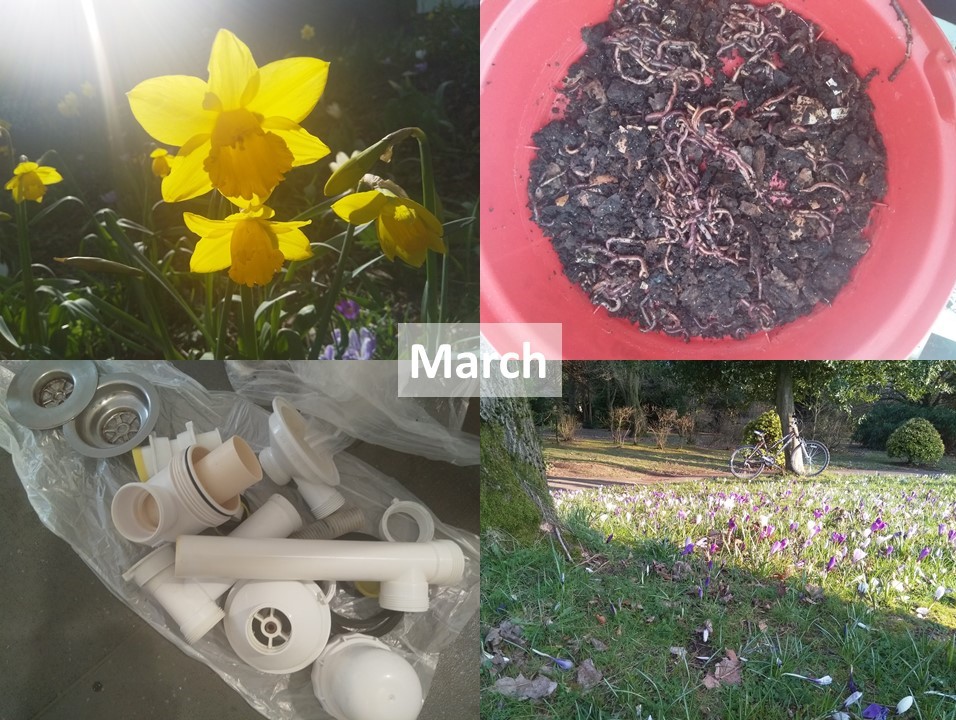
I write, you may have noticed, quite a lot of words. But as a whole year of global pandemic, restrictions and uncertainty rolls around I thought I'd try and tell the story another way. So, I have scrolled back through my phone memory and tried to pick out just a few photos, with no words, no explanation, which somehow capture each month. Even in a year where nothing much has happened, I found it quite tricky to narrow it down and choose those which feel like they best encapsulate the year. Originally it was going to be one per month. In the end, I settled for four.
They are, of course, mere snapshots. They do not tell the whole story, but maybe they do tell part of it.



We live in a building that doesn't have a letterbox. That means that each day, the postman has to ring the doorbell.

I do, also, quite like receiving post. I am, like all of us, surrounded by digital communication, and while I like the ease of keeping in touch that the likes of WhatsApp offers, I confess that at times my email inbox feels more like a burden than a source of life! But there is something different about real post and I generally find receiving letters exciting.
Several times in recent months, I have realised or been reminded that there are people for whom the post arriving evokes very different emotions.
* * *
Way back in the first lockdown I remember facilitating a discussion with the Stories group about what the struggles of lockdown were, and what were the positives. Knowledge that in those strict early days, everything, including the Home Office had probably more or less ground to a halt led one member to say, and others to agree ... that the post arriving no longer left them feeling really anxious in case it brought bad news.
* * *
Back in the summer, I sent some post out to the group members ... partly homework, partly just because I, at least, as stated above, like getting post and thought a bar of chocolate and a pen and a few other bits and bobs dropping through the door would be nice. I used, without giving it a second thought, brown A5 envelopes, because that's what I had. They were, all, I think, happy to receive them once they opened the envelopes ... but one or two did mention, next time we met, that they "thought / worried it was from the home office" when they saw it drop through the letterbox.
* * *
Recently some of the group were speaking to some young adults. We have done a number of these virtual visits recently and they are always immensely powerful. Often, I find, it is not the big overarching experiences which are the most moving, but the small details, the snippets of stories which bring home the realities of seeking Sanctuary. One such moment recently was when an asylum seeker, speaking of the stress of living with constant uncertainty through the process, explained that every time the post comes, if you see it is a brown envelope you worry, will it be a letter from the home office, will they tell you you have to leave your house, will they say they are sending you back to your country where you are in danger.
* * *
I can't really begin to imagine living with that level of daily anxiety.
Knowing all this hasn't stopped me appreciating receiving post, hasn't stopped me enjoying opening letters, hasn't stopped me enjoying greeting the postman with his cheery smile each morning.
It has helped me appreciate that this too is a privilege.
I spend a lot of time thinking about stories: about what stories we tell and how we tell them: about who tells those stories and to whom, and who gets to frame the narratives.
Earlier this week I attended an excellent workshop as part of the Refugee Week Slow Conference which focused on storytelling ... and identifying and unpacking both the power and the problems of inviting and encouraging asylum seekers and refugees to share the first-hand stories of their lives.
Little of what was said was new to me ... this is, after all, what I try to do and while I'm sure I have made many mistakes along the way, I was reassured that much of what I hold to be important was reflected in the speakers' contributions.
A lot of it was about process and not just product. A lot of it was about ownership and agency.
And a lot of it was about simply creating a space that respects the humanity of each individual. Any of us may sometimes find ourselves speaking as the "representative" of a group or type, but all of us, also want to be heard as speaking simply for ourselves.
Some of that touches on moving away from how migration stories are very often framed: the good immigrant / bad immigrant; worthy / unworthy; legal / illegal narrative. The narrative that starts by suggesting the migrant protagonist of the story must be either victim or villain or hero. A narrative which is unhelpful because most migrants, like most of the rest of us, are none of those, or perhaps a mixture of all of them. Our humanity encompasses our flaws and failings, our suffering and our triumphs.
* * *
In another of my many zoom calls this week, a Lenten liturgy session, we were invited to reflect on forgiveness. Among other things, the person leading commented on the fact that knowing what we do about child development, about the teenage brain, and about everything hormonally, socially, emotionally, that teenagers are going through; they are generally much easier to forgive than adults. She suggested that perhaps we should reflect on how we could learn to offer that same grace that we feel able to give to them to ourselves and one another in adulthood. At least that's my memory or interpretation of it.
* * *
So all of these thoughts, and others, have been floating around my mind this week when today I found myself scrolling through the Stories of Hope and Home twitter feed. It is mainly made up of refugee charities and campaign groups, the odd immigration lawyer, with the occasional faith or arts organisation mixed in for good measure. I am well aware it is an echo chamber which doesn't represent public opinion. For at least some of those I follow, today's hot topic was the supreme court judgement in the latest stage in the Shamima Begum case.
In case you missed it: the edited highlights (as far as my non-legal brain understands them) are that this was not a ruling about whether or not she should have been stripped of her British citizenship but on whether she should be allowed to enter the UK in order to make that appeal. And the upshot is that despite acknowledging that it means she will not be able to have a fair appeal process, that is not sufficient reason for her to be allowed to come to the UK to contest the case. For any more than that, Free Movement offers a much fuller commentary of what it is all about.
To my mind there are a few facts which need to be remembered.
She has Bengali heritage but was born and brought up in the UK and has never lived in Bangladesh, the other country for which she is potentially entitled to citizenship. When she travelled to Syria to join ISIS she was legally a child at just 15 years old. Whether it was her own fault or other wise, she has suffered an extremely traumatic six years including, while still a teenager herself, giving birth to and losing three children.
More than any of that, she is, as should not be forgotten, a human being. This too is a fact.
Alongside the facts there are lots of very, very strong opinions about this case. I know. And plenty of suppositions too.
Perhaps she was a victim, groomed and abused by others who exerted power over a vulnerable young person. Perhaps she was phenomenally stupid, with consequences that turned to be somewhat more far reaching than the phenomenally stupid decisions of lots of other fifteen year olds. Perhaps she actually intentionally and deliberately acted in ways that were very, very wrong and destructive.
Perhaps she is still a risk to national security, and perhaps she isn't. Perhaps she should have to face some kind of justice or accountability for her actions. Perhaps that needs to be in the country where, whatever the circumstances surrounding it, she made the decision to travel to a warzone and join the side we hold to be the enemy.
Perhaps she needs a whole lot of help and support. Perhaps her experiences have given her something she could offer back to others.
Perhaps some mixture of all of the above is true. Perhaps none of it is
Even in the worst case scenario that she is in fact a very unpleasant person who poses some level of risk to the rest of us ...
There are plenty of unpleasant people who I would still argue should have the right to a fair trial; who I would not want to see stripped of the citizenship of the country of their birth; who I think should still have their human rights respected rather than dismissed as secondary considerations.
There are plenty of unpleasant people who can still be forgiven, who still have some hope of redemption.
There are plenty of unpleasant people who are still human.
I wish we as a nation had remembered something of Shamima Begum's humanity before we turned this child into a pariah. Before we decided that someone else was always going to be able to frame the narrative. Before our home secretary, upheld by our highest court, ruled that whoever else is going to be given ownership and agency in telling this story, it won't be her.
(If you want a powerful and coherent explanation of why the removal of anyone's citizenship is problematic: https://www.theguardian.com/books/2018/nov/17/unbecoming-british-kamila-shamsie-citizens-exile)
Today, the Sunday before Lent begins, the lectionary followed by many churches features the story of the Transfiguration. Although the text is a mere 8 or 9 verses long, it is packed with rich imagery and meaning... some, perhaps, relatively self-explanatory; some, perhaps, fairly incomprehensible. Like many bible texts, it is also rich in both promise ... and challenge.
Having been reflecting on this text during the week there are so many aspects of this texts which interest and intrigue me but I thought I might share my thoughts, in particular, about how the disciples respond to this mountaintop experience. After initially being stunned into silence and inaction, the disciples, or specifically Peter, do finally, respond to the scene unfolding before them. With an offer to set up three shelters.
Aside from my possibly slightly irrelevantly wondering whether or not they have come prepared for shelter building, there are several things that strike me about what this response seems to symbolise.
The first is the desire to contain. The transfiguration takes place away from the city, on a mountain top. We can probably assume it feels wild and exposed, and that there is a pretty good view for miles around. Mountain tops are one of the places where we become aware of magnitude, of vastness. They often feel wild and exposed.
Peter's response is to take this thing which is out in the open, which is somehow wild and uncontrollable, and to put it inside. To draw boundaries around it. To define the space it takes up. Where it begins and where it ends.
The second is the desire to compartmentalise. Here we have Jesus, Moses and Elijah, in conversation with each other. A coming together of these different strands of understanding of the journey towards being in relationship with God. The law, the prophets, the messiah: united in conversation with each other.
And yet, Peter does not suggest building one tent where the conversation can continue, but three. Separate shelters. To take these overlapping circles which both connect and contradict and to pull them apart, each into their own place. To divide in order to more easily define.
The third is the desire to prolong or make permanent. Jesus has come away with three of his disciples, leaving behind the rest of them, taking a break from the ministry of teaching and healing, stepping out of a journey towards crucifixion of which he has already spoken. The disciples possibly ought to know by now that Jesus never stays anyway for long.
But Peter responds by wanting to build here. To create shelter. To cling to the moment. To tie down and hold on to something which was probably only meant to be temporary, only meant to be one part of a continuing experience, to be one more step on the journey.
I think the reason Peter's response to this situation strikes me is because it symbolises something so very deeply human about our response to the divine and the mysterious, something which is easily recognisable because I can see so easily the parallels to how the church as both communities and institutions, to how I (and probably many of us) are tempted to respond too.
That faced with the vast, wild and uncontrollable nature of God, we have a natural desire to control and contain.
That faced with the incomprehensible and seemingly contradictory expressions of the divine, we have a natural desire to divide and define.
That faced with mountaintop moments of majesty, we have a natural desire to cling to that which is meant to leave us marked and changed but not hold us back from journeying onwards.
Although not explicitly stated, it seems pretty obvious from the text that those shelters do not get built. I suspect we probably shouldn't be building them either. I suspect we too are supposed to come down the mountain.
I was recently trying to answer a question ... I can't remember exactly how it was worded, but the basic premise was why have you chosen to live your life the way you do: community, work, stuff I am involved in ... a life which is a bit less conventional than the one they had, I guess, identified I could be living.
I think I probably gave a rather waffly answer (no change there then) so this is my attempt to write the (slightly) more coherent (but probably still quite waffly) answer I wish I'd given.
Privilege
One thing I undoubtedly failed to acknowledge but of which I am in fact acutely aware, is the level of privilege which has certainly been a factor in allowing me to make many of the choices I have made. I know that the range of possibilities from which I am able to make my life choices are not something available to everyone and are not of my own making. Not everyone starts out in life with as many options. I am lucky enough to have had access to a good education and have good qualifications to fall back on; I have always had very good mental and physical health; I have a safety net of family and friends who are able to offer me security and support in immeasurable ways should I need it; I have a British passport not because I deserve one but because I happen to have been born here. None of this is of my own doing.
Perspective
So much depends on where we are looking. Some of those who did their teacher training at the same time as me have probably climbed the career ladder and are head teachers by now (not that I envy them that). But Martin Luther King had lead the civil rights movement and got assassinated at about my age so ...
Prayer
I did talk about prayer. I find it quite difficult to talk coherently about the importance of prayer in shaping my life ... although those of you who follow this blog will know I have used a good many words in the attempt! I genuinely believe that a commitment to a regular routine of prayer has been an essential element in shaping the life I lead. Not as a direct cause and effect, "Jesus told me today to do this so I did" but in some way that is deeper and more mysterious than that.
Partly it's about stopping. About having conscious time when I am not 'doing' am simply 'being'. There is something in that of accepting not being in control, not having to do everything.
Partly it is about experiencing the unconditional love of God. There is something about knowing myself to be loved which both helps me cope with all the stuff I cannot do, all the problems I cannot solve as well as feeding my capacity to offer my own imperfect version of that love to others. There is something about love which overcomes fear: the fear of the future, the fear of letting go of some of our security blankets, the fear of the other, the fear of the unknown.
I am, I hasten to add, casting no judgement on the many amazing people doing phenomenal things with their lives in whose lives prayer does not feature. We are all on our own journeys. This is mine.
Process
All of this has been and still is a journey. I can look back and know I am not the person I was ten years ago, or twenty years ago. I hope I will say the same ten and twenty years from now. Each decision feeds other decisions. My life hasn't involved any major u-turns, any complete re-orderings of my values, principles or lifestyle, any starting again from scratch with a different worldview.
I wrote that and then realised I did at one point go from teaching in an academically selective private school on the outskirts of Paris where I could have fresh baguette for breakfast and visit the Eiffel Tower on a school night to living in a religious community and teaching in a vocational training centre for disadvantaged young adults in the Philippines which could, on the surface, look like a pretty major shift!
But overall, it still feels true to say that life hasn't been, mostly, about big decisions, but about little steps which have engendered experiences which have lead to other little steps.
Certainly that is true of my passion and commitment to attempting to be in solidarity with those who have sought sanctuary in the UK. When I moved to Birmingham I knew little about those issues. I offered to volunteer at the Sanctuary, not because I cared deeply about refugees, but because I was looking for volunteering opportunities that would use my gifts and they needed English teachers and I thought I could probably do that. It was the people I met, the stories I heard, the friendships I made that brought me to where I am now.
One foot in front of the other. Step by little step, it is a journey which feels like it has taken and is taking me to somewhere very beautiful and exciting. There's the risk of all sorts of cliches and potential internet memes in this, but, from experience, it feels true. Each step leads to the next one.
I really really wanted to come up with another word beginning with p to make my final point, but unless I fall back on privilege again, I can't think of an appropriate one.
So the other struggle I have when answering this question is that I wonder whether it comes from a place of others feeling like I am making a huge sacrifice by the way I have chosen to live. And that's just not how it feels from where I am standing.
OK, I acknowledge, probably (although nothing is ever guaranteed) I could have more material wealth than I have if I had made some different choices along the way. But I don't feel like I am making any great sacrifices, that I am experiencing any hardship. I still live an extremely comfortable, privileged life.
I do work hard, mostly. I do witness pain and suffering and there is a cost to that. I do get angry and frustrated at a church, society and world which I believe could be so much better. I do at times feel powerless and occasionally overwhelmed. And yes, life can be draining and exhausting. (But hey, my other option was being a teacher and most of them are permanently tired too!)
But all of that is far, far outweighed by the fact that when it comes to all the things that really matter, my life has been immeasurably enriched by the encounters and experiences that I have been privileged to have. The main beneficiary, the person who gets the most from the way I live my life is, undoubtedly, me.
Sometime I feel inspired with creative ideas. More often, I kind of want to do something creative but am short on ideas as to what to do or where to start. A blank canvas and empty paint palette can be somewhat daunting.
So a couple of weeks ago (or maybe a little longer than that now) I tried something. I asked those I live with to "name a colour" "and another". I stopped when I had four colours: blue, orange, purple, turquoise.
Putting those four colours and nothing else on a paint palette at least gave me somewhere to start.
So I painted this which, to be honest, I wasn't overly enamoured with, but I'm sharing it anyway because it was part of a process.

Over the next couple of weeks, I stuck with that select palette. I returned, several times, to sit down again with those same colours and see what happened. These did.


This week has been the Week of Prayer for Christian Unity, a time always marked in Birmingham by #pray24brum, an event I have been actively involved in organising for the last few years.
As various phases of pandemic and lockdowns have evolved, so had the plans, but by the back end of last year, in amongst everything else, it had certainly ended up very much on a back burner as we all dealt with, ya know, global crises and stuff! By early January, with it becoming clear that if it happened at all it would have to be entirely online, I at least, was questioning whether we had the time, energy and capacity to pull together something meaningful and prayerful which would add anything extra to the plethora of online stuff already out there.
But a few conversations and emails later we made the decision to press ahead with a very different #pray24brum. I am, now, very glad we did.
Filling 24 hours of digital content, at a time when churches are already busy and trying to adapt to yet another new way of supporting their communities, was undoubtedly unrealistic: but the 24 lived on in an invitation to pray for 24 minutes at some point during the two days. Churches and groups were invited to prepare and lead 24 minutes of online prayer, but there was also an invitation for people to step away from their computer screen and commit the time to praying for 24 minutes in whatever way they wished, alone, in their household, but in some mysterious way connected to a community. The image of "a patchwork of prayer to cover the city" evolved.
In the end there were times of prayer led by 18 different groups. Something in the time, effort and prayer that all those different groups put into preparing their slots served as a reminder that there are others who really value this event too. Facebook insights and twitter analytics notwithstanding we have no idea how many people really engaged with the online content. We have even less idea how many people may have taken up the invitation to set aside their own 24 minutes of prayer. Perhaps none of that matters. Perhaps what matters is simply that it happened.
And for me, personally? This event has always been a very important one. I love the constancy of our regular routine of prayer but #pray24brum has always been a boost, a little reminder as we start a new calendar year that we join with others, across different traditions and expressions, who are committed to and believe in the importance of prayer.
And yes I have missed physically being with others, people I know, people I don't, people I see only once a year but who I have come to appreciate sharing in prayer with: almost a little like going on a retreat or something, although it is only as I write this that I've come to think of it as such. And yet, albeit through a computer screen, I did feel like I was once again connected to and praying with those people.

I am pleased that I was able to set aside time to focus on the event, just as I would have done if we were meeting in person. I am not saying the rest of life entirely stopped for two days, it never does, but most of my diary was intentionally blocked out to spend two days ensuring all the content was posted and shared as it should be, and praying. It would perhaps have been easy this year to just "have it on in the background" and I appreciate that for some that may have been the right way to engage. For me, it was valuable to take the computer, stop (mostly) trying to do other things at the same time and just engage with the content and pray. It was valuable, in the breaks between social media, to go out for a couple of short walks still focused on the idea of praying for Birmingham, ... and it was valuable to watch the snow fall with a slight sense of relief that no contingency plans were required!
I am very glad that #pray24brum was able to happen this year, albeit differently. I am very glad to have been part of it.
(Most of the content from the two days, should you be interested, is available on the Birmingham Churches Together Facebook Page)


Winter isn't, generally, my favourite time of year.
That said, ever since I spent a year living somewhere the weather never really changed very much and the days were all more or less the same length, I promised myself I would remember to enjoy the turning of the season and the changes they bring.
And so while I am ready for grey days and dark evenings to give way to the spring, here is my celebration of the best of winter ... Walking beneath the pale winter sun amidst crisp white snow followed by curling up with a cup of tea in front of a fire.
If I was a better artist the blue should probably have shone through more in that sky, and a good book should probably have made an appearance too.
